
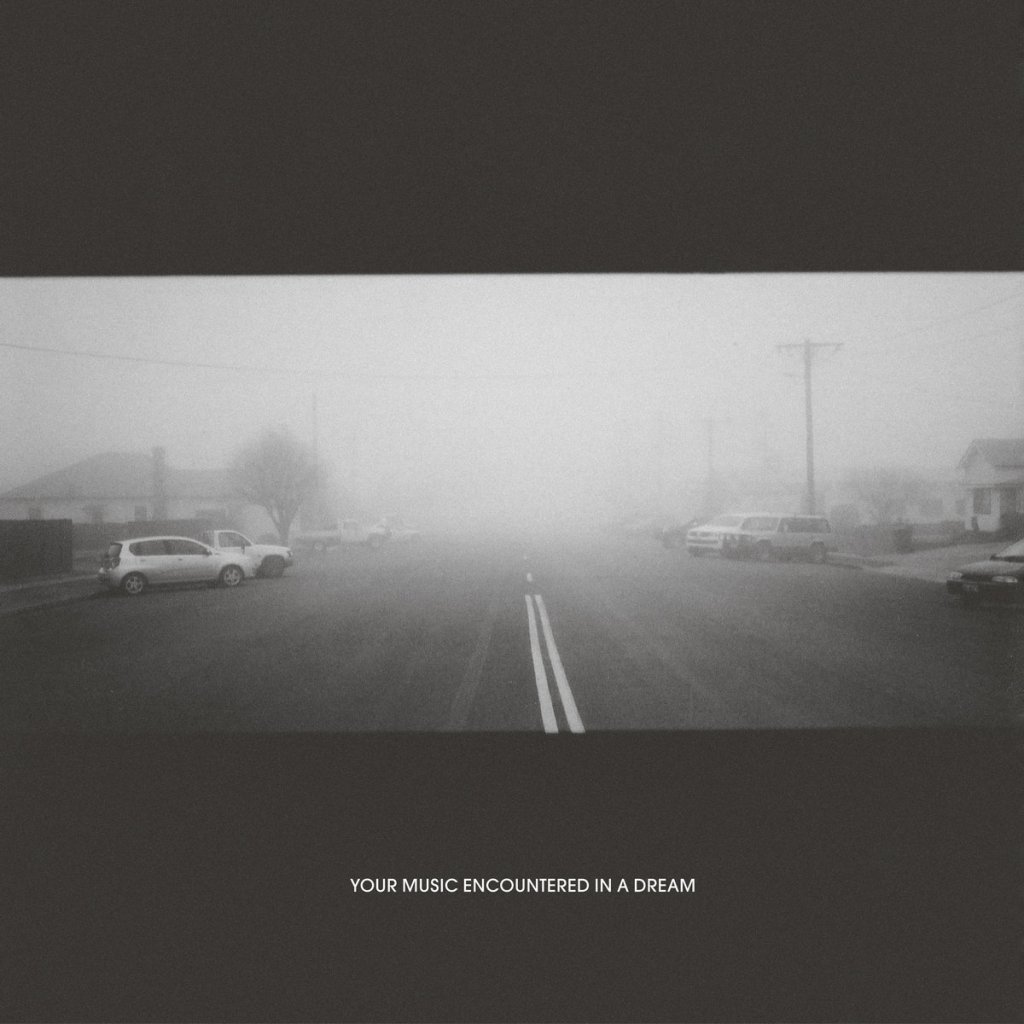
David Grubbs and Liam Keenan release their debut album, Your Music Encountered In a Dream, capturing their first ever session together, on CD and digital via Lawrence English’s Brisbane-based label Room40.

I’m listening to this record with a sinus infection.
Congested, migrained, exhausted, I know this isn’t the same music to which you’re currently listening. And I know this is neither normal nor optimal conditions for consuming auditory information, but, I’d also argue that maybe it doesn’t really matter?
Okay, chill bruh. Let me explain. Yes, sound matters. Yes, clarity matters. Yes, artistic intention matters. We want to be able to experience a work in the way an artist has designed it for us, right? In ideal conditions always, and in a setting that respects that artistry with patience, alertness, and attention. But here’s the other thing: when are any of those elements ever a given? I mean, hissy bootleg Grateful Dead trades played in the busted speakers of my ’96 Chevy Beretta basically changed my life. You couldn’t hear shit! Most music these days is literally played out of the speakers of someone’s iPhone and into a coffee mug.
When music is made in a session, in collaboration, in a day, in a moment, in space, as Grubbs and Keenan’s, something else is happening entirely — something greater than the sum of its parts, and something beyond clarity. Indeed, something dreamlike.
In recollecting dreams, we’re always striving for something like clarity, or a way to string together events and encounters into a narrative that makes sense. We also know that’s not really the point of dreams, it’s just tempting to do so. I also think we do the same thing with music, we want to be told a story so we always default to looking for one; whether in lyrics, in tying together songs across an album, or simply looking for some kind of meaning that sheds light on what we’re dealing with. When you boil both down, dreams and time-based creative action, isn’t the “story of it all” just be some kind of abstract, emotionally charged mapping of brainwaves reacting to input stimuli?
I haven’t even gotten to the record yet. (lol.)
Beep Beep, whoops that’s my tangent alarm going off. But that’s where this album starts for me. Your Music Encountered in a Dream is a new recording by American guitarist, composer, sound designer, writer, curator, et cetera, David Grubbs, and Sydney-based guitarist and songwriter Liam Keenan (aka Meteor Infant), created in a day in-studio in 2023.
I really don’t want to create a notion that this is reductive, but the simple beauty of this session is how it really does transmit a sense of dreamy wandering. It reminds us that the same brainwaves receiving this music as a listener were there right from the beginning in improvisational, momentary play between these two.
I recall a lot of Grubbsy tonal references here — not just of his past solo works and the kind of playing you’d hear across his collaborations and Gastr Del Sol, but of his contemporaries like Darin Gray, Mick Turner, Jim O’Rourke, Alan Licht, Loren Connors, and so on. Across three extended pieces lasting 40 minutes, there are familiar elemental blocks, rehashed memories and habits, but the way they self-organize is different here.
Keenan’s addition into Grubbs’ brainwave memory palace is what turns this into the dream, and reshapes the elements we’ve all come to expect from his guitar neck over the last 30 odd years. Keenan, younger, brings a unique palette to this canvas too however. His landscape-width sense of aural structure gleaned from life in the Australian countryside, Keenan’s singer-songwriter project Meteor Infant has put forth some serious pastoral, sun-drenched sobbers.
That said, his Ohio Street, a longform guitar and tape reflection broken up into miniatures and strung back together by thread, features no vocals at all. Timbrally and texturally, this feels like the proper starting place to approach his collaboration with Grubbs, and I’d say the two locked in pretty quickly to each other’s brainwaves.
It’s not really the duo’s responsibility to put these elements and palettes into a structure when improvising, as much as we might be inherently seeking one. They just need to wander the landscape together on horseback, navigating the technicolor dream state and leaving it brighter and more vivid than they found it. It’s a joy to conclude that these two have succeeded.
Listen and purchase here, please.
 The Royal Editoryal