
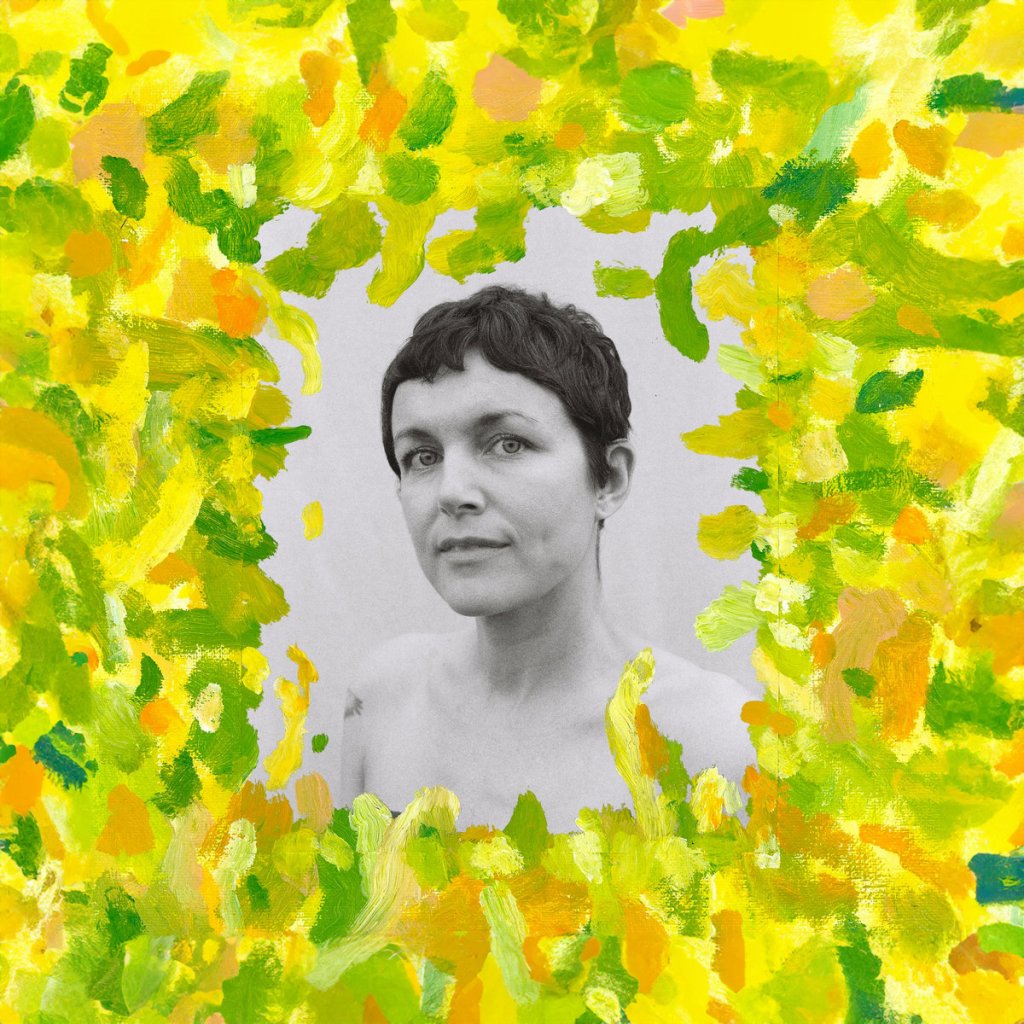
After fifteen years of a predictable lifestyle, songwriter Cara Beth Satalino changed pretty much everything about her life, and upon settling into some newfound vulnerabilities, created the supreme, bold, stripped-back, ten-song distillation, Little Green, for UK label Worried Songs.
Turning your life into song is one thing. It’s not easy, but it’s a playbook of sorts that all songwriters have to at some point grapple with on a highly personal level; how to write the stories of your life into verse and distill so much intensity and emotion into very little space.
But it’s a whole other beast to have the rug of life be completely swept from underneath you, to burn totally out, and then to pick yourself back up and find a new way to go on, with a song to sing at all.
Cara Beth Satalino has been in bands for most of her life, and was living a semi-sought-after artist’s life in Baltimore, when it all just became a bit too precarious all of a sudden. Waiting tables and collecting tips to survive, touring whenever opportunities came up, and striving for any indication that her indie-rock band Outer Spaces might “make it” eventually paralyzed her ability to feel settled in life.
So, her and her life-n-music partner Chester Gwazda upped and took off. They left Baltimore for New Jersey, pursued academia, got diagnosed with a chronic illness diagnosis, got knocked off their feet by a global pandemic, got pregnant unexpectedly, and fell victim to mental health issues. Suffice to say, school didn’t last long after that.
But music was always there to help.
Somehow amidst all this chaos, Little Green was born into the world. And the world is a better place because of it.
Maybe it’s odd, maybe it’s not — I’m not sure there’s a right or wrong way to filter and transmit trauma artistically — but nothing about the record reflects gloom. Melody drives this train and there’s enough fuel for a hundred trips up and down the consonant valley.
Harmony really is a timeless art. And it’s not going anywhere, anytime soon. It’s a field of sunflowers you can walk through, with arms outstretched on both sides, it’s a weathered old wooden table in the backyard draped in a checkered table cloth covered in food, it’s a cool lake that surprises your body when you jump in and slowly warms around you like a hug.
Satalino’s voice bends naturally to the curves of melody, with very little resistance as if guided by magnets, orbits, topography. Her voice is a highway of abundance. Stories broadcast through the voice, but memory goes the other way, feeding back into it; there’s so much meaning in a sung note. In a word and how it is delivered, in a tremble and a pause. Melodies are sometimes circles, they go somewhere and return back, they wander and find home in unexpected twists and turns. Like life, like stories, like bottles with messages, like roads around a mountain.
Whether intended or not, Satalino’s melodies make their home in the transmission of meaning. And this record is filled with it.
Evidently steeped in a heavy tradition of folk, this new paired-down sound of hers does read more modern than some of its influences like Karen Dalton, Fairport Convention, Gillian Welch, perhaps even Stevie Nicks. Although her vocal delivery gives hard Dolly Parton vibes (and the occasional lap-steel appearance testifies), rather, hers is a sound tuned very intimately to contemporary ears.
I’d almost imagine this record being churned out by a blissed-out, linen-draped Phoebe Bridgers after a weekend in an Adirondacks cabin. Further, I anyone who’s as old as I am will hear lilts and licks borrowed from the mouths of Beth Orton and Aimee Mann, which just flat out nails me to the wall, a love punch to my tender heart.
And there’s one other reference I’d kick myself for not mentioning (as reductive as it is to keep barking up old trees). Raise your hands if you’ve ever heard Angela Desveaux’s Wandering Eyes? Just upbeat enough to keep pace with Satalino, both alt-country records find that granular sweet spot between saccharine and sorrowful.
So yeah, Satalino nails it. Chalk that up to her work(wo)manship.
She’s hit the roads of this continent’s tour circuit for years. She’s done time, done the work. Contrary to romantic public imagination, an artist’s life is not a life of leisure — one’s hands are constantly in the dirt picking weeds and planting seeds. That her sound has such identifiable depths and contemporary resonance, but an intimacy of pain and reflection pointing the dagger inward, is a testament to the work she’s put in to tunnel her way into the great belly of American song.
I love this record because of what it says. And not subtly.
It says I know this world is tough, and I know I might sometimes fall weak to its dominance over me, but I know that I will also feel strong again, and when I do, I’ll come back fighting with beauty. With knives of compassion and pistols of forgiveness.
Please check out Cara Beth Satalino’s work, as well as the fruit-bearing tree that is Worried Songs, based in New Brighton, UK at the link below.
Listen and purchase here, please.
 The Royal Editoryal