
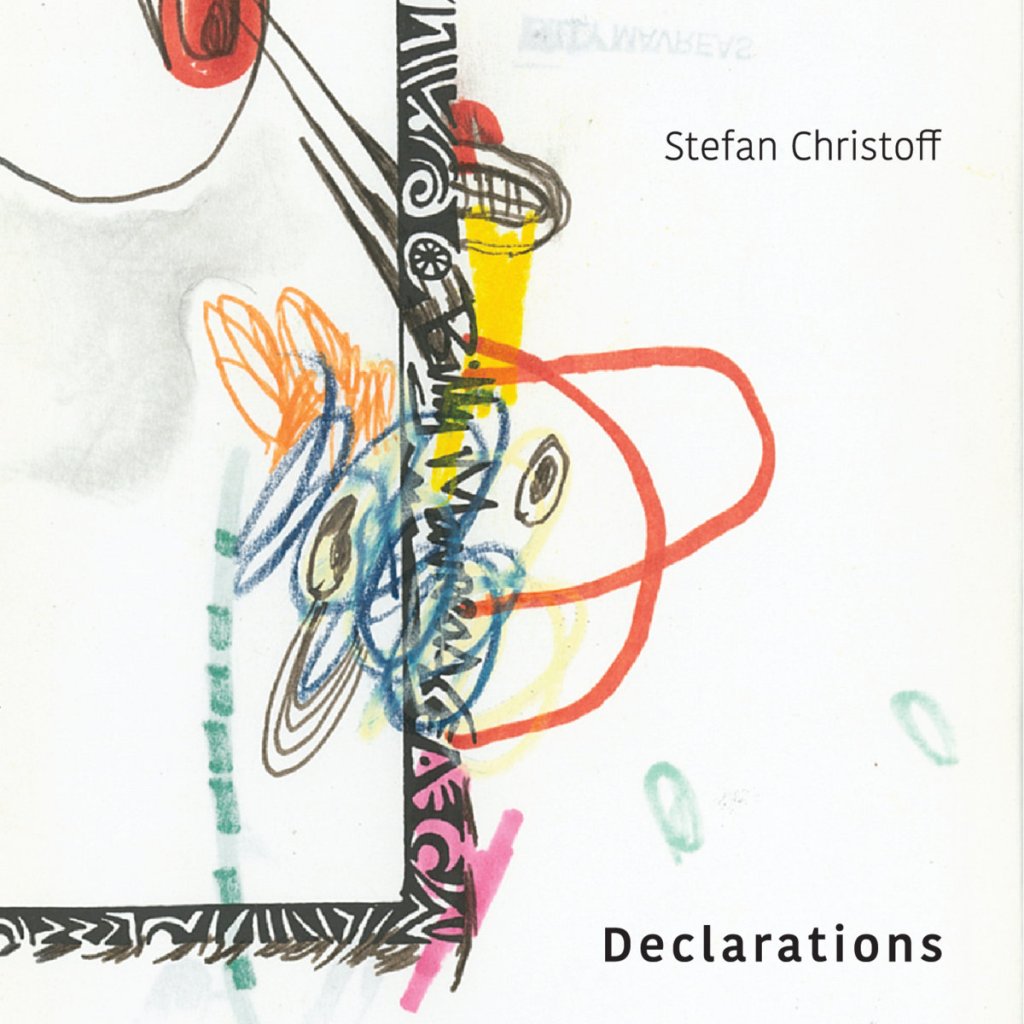
Stefan Spirodon Christoff is a media maker, community activist and musician who lives in Montréal. His latest solo offering, Declarations, released by Montréal’s own Cuchabata Records, collects solo guitar improvisations recorded 16 years apart, in apartments and studios all the way across town.
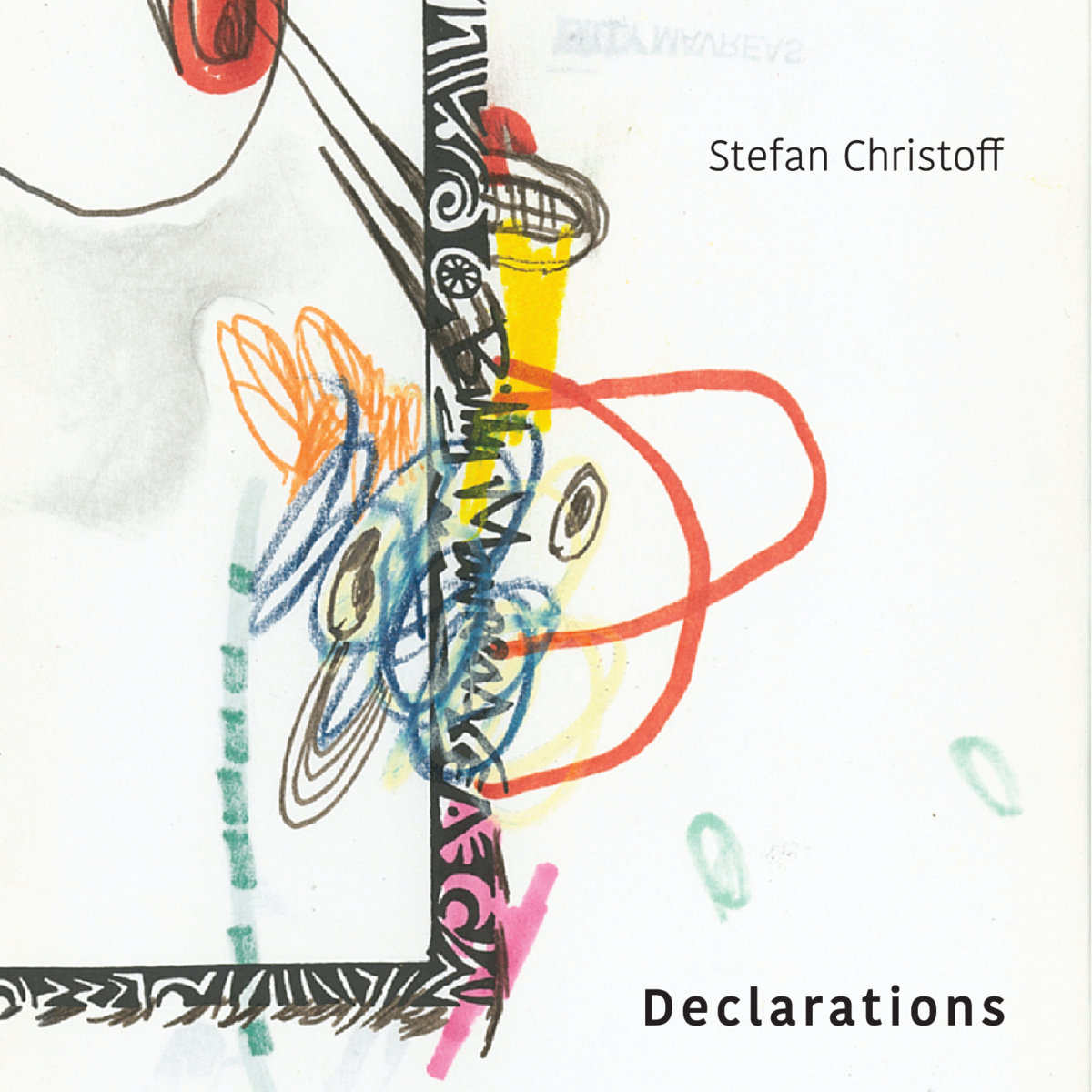
The guitar is a voice.
Some have made it weep, holler, scream, bawl, and howl, many have made theirs argue in duels, others have made theirs sound like power tools, most just want the instrument to sing.
But how about the idea of the guitar speaking; speaking for something, for someone, for change.
I’m examining the idea of change here specifically because Stefan Christoff’s dual lives as an artist/curator and an activist have both for over 20 years revolved around creating positive change, and creating the space for others to examine and produce change in society. Whether that’s through elevating local, independent, and/or marginalized voices in his radio shows and curated events, or his political organizing and community development activities, the status quo is simply too oppressive to ignore and must therefore be challenged with ideological communication and public-facing, on-the-ground action.
But change here is also something I think Christoff is inspecting in his own personal, creative life with this newly published collections of solo guitar studies spanning 16 years. Half of which come from various sessions throughout 2000/01 while living in Griffintown (a neighbourhood in Montréal which has itself undergone undeniable demographic and economic changes during this timespan), and the other half were recorded in 2015/16 while living across town in Parc Extension. Indeed, recently, Christoff also welcomed his first child into this world which has opened up yet another chapter in his evolving story.
I’m not sure the point of pitting these temporally polar pieces together is necessarily to listen for what may or may not have changed in Christoff’s sound or skill during this time — nor is it to pinpoint any exactitudes or revelations stemming from the title, “Declarations.” Rather, these works feel as though they want to be treated as artefacts of change, fossils, polaroids, height markers in crayon on the wall in the kitchen. They are the products of a changing life, a tape measure of time passing, distance, and growth, as if the mere fact of their existence allows space for our questions around change to linger and remain unanswered, and eschew the certainty that we tend to ceaselessly seek, just a little bit longer.
Seemingly, change is worth nothing at all if it doesn’t teach us something about ourselves in the process.
Take a first listen:
Christoff as an artist is somewhat of a chameleon.
A serial collaborator, he’s forged creative projects with classical artists, jazz artists, noise artists, poets and writers, dancers, and more on record and in live performance. Yet he’s equally globally known for his solo work on guitar and piano, adopting a patient, freeform style borrowing from luminaries like Lubomyr Melnyk, Robbie Basho, Jack Rose, and Greg Haines.
The solitary sketches that make up Declarations have a unique feel to them, albeit undeniably resembling the playing style that Christoff has been continually workshopping throughout his musical career. They feel like basement tapes. There’s a shadow cast across these amp-hissed tracks that touches chords of loneliness, pensiveness, weight.
If our guitars may be allowed to speak in times like these, what would they say to us? Would they reveal something buried deep inside ourselves that only they could detect? (I’m thinking now of Sampha’s lyric: “No one knows me like the piano in my mother’s home.”) Or would they speak as if reacting to sensorial stimulus like a mood ring, constantly fading between colors and shades assigned to the painter’s pallet of emotions.
The changing of colors and shades is native to the chameleon of course, and native to the improviser. Both adapt to their environment and preempt changes within it. I think Christoff might see himself as a kind of radio tower or transmitter of a current that naturally flows around him as he plays, confident he’ll be able to translate the emotionality of that current and conductive to the evolutionary sentiment in the air at that time.
The emotiveness of Declarations isn’t entirely his own, but ours too. They’re our lonely nights, our uncertain directions, our complicated relationships with our neighbourhoods. These are fragments left behind from our old apartments, our past lives, our sleepless nights, as much as they are his.
Music this open-ended always tends to have a communal feeling to it, I find. We give to it our own elements of meaning, and perhaps music like this invites us to. As someone who spent many lonely nights playing guitar through a hissy amp in apartments across this city, it’s hard for me personally to listen to material like this without attributing my own memories to these tracks, but I’d be surprised if that wasn’t somewhat universal.
When one picks up a guitar and strums away, or when one puts a record on and lays down to listen, is that moment considered living life or killing time waiting for life to happen elsewhere? Is music always such a portal to these liminal spaces, or a transporter to other invisible, imagined realms?
Maybe music is simply a way to measure the experience of time passing, and to mark the changes in our life as they happen, especially if we don’t have a crayon handy.
Please check out Stefan Christoff’s work here, and purchase Declarations via Cuchabata Records at the link below.
Listen and purchase here, please.
 The Royal Editoryal