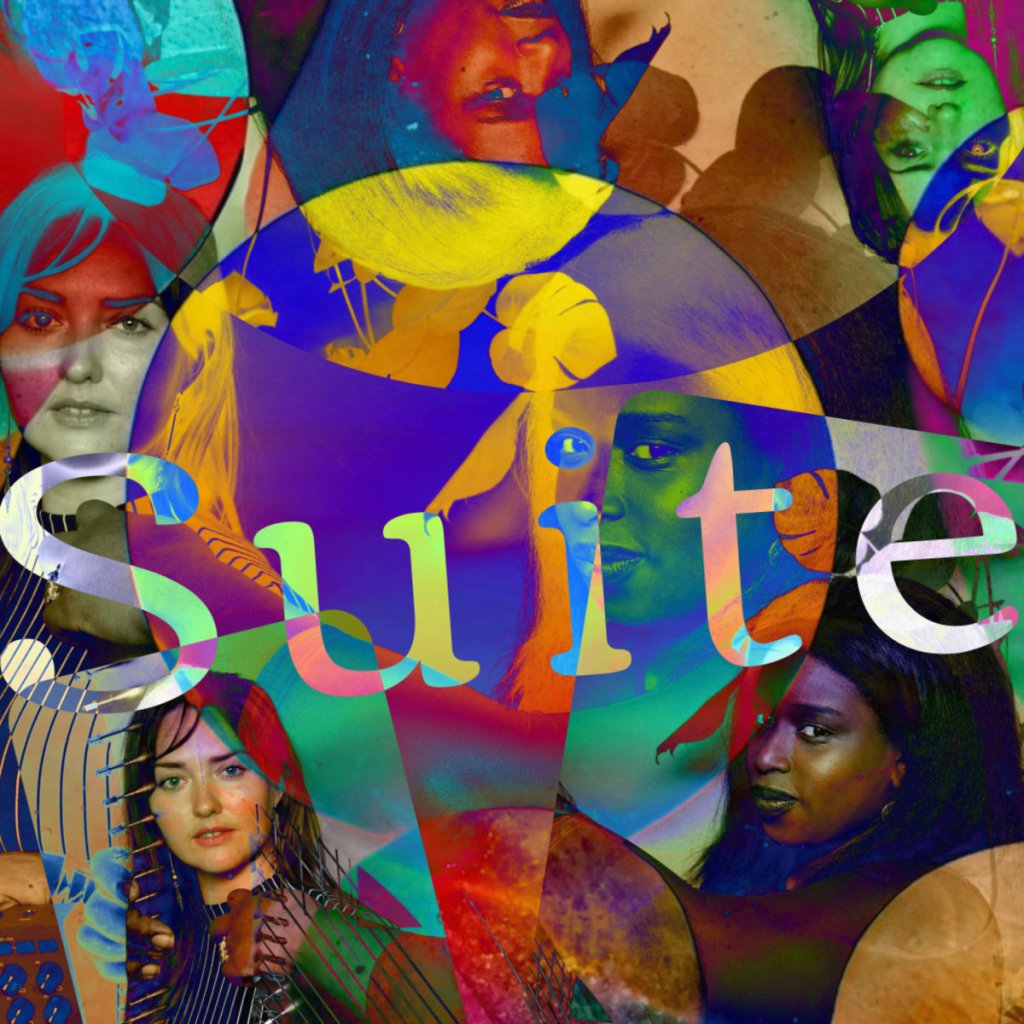
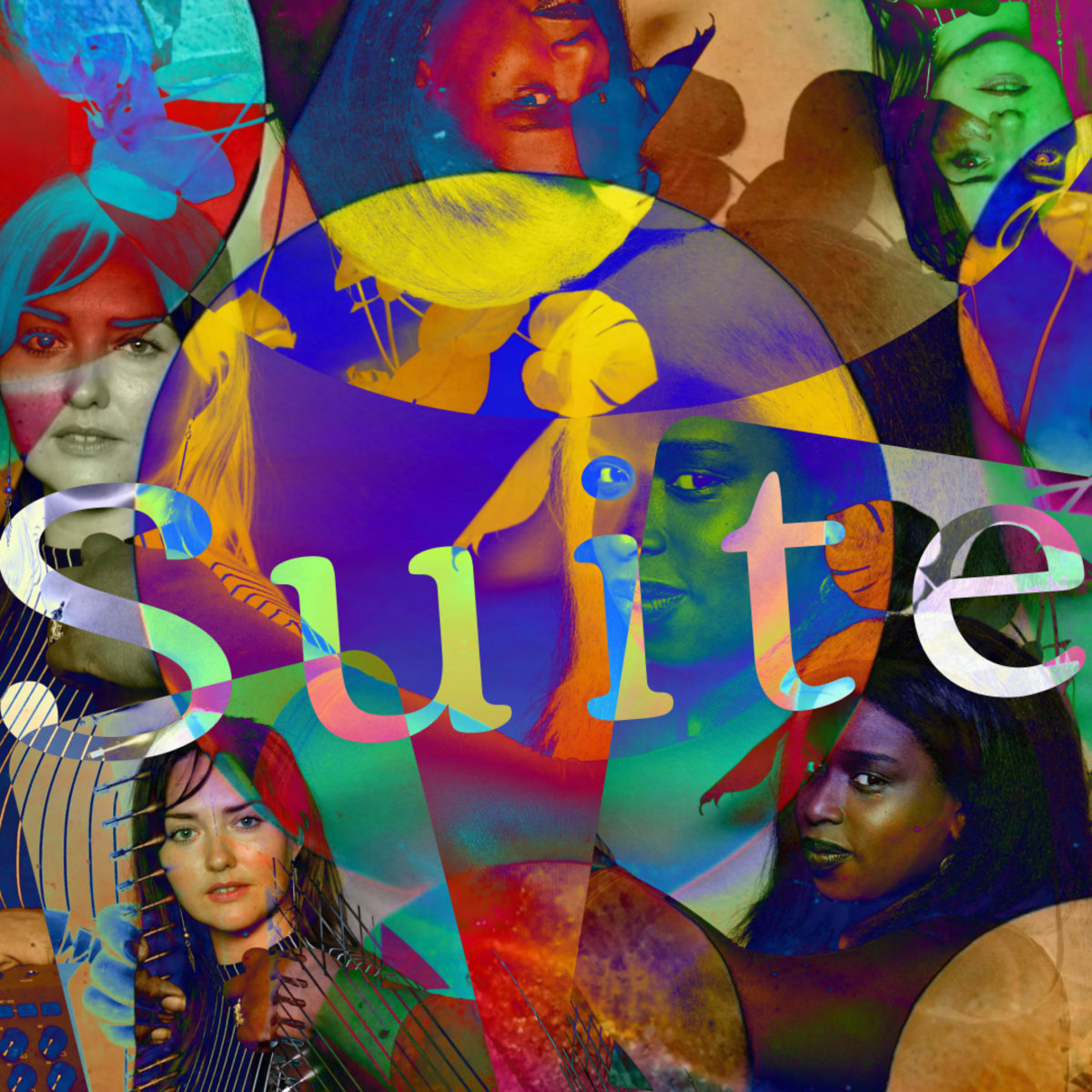
Suite is the debut record by New Orleans based artists Cassie Watson Francillon (harp, effects) and Sasha Masakowski, aka Tra$h Magnolia (voice, electronics, drum programming). The album was created over a two-year-long writing and producing period following an impromptu pop-up collaboration in 2022.
Being ambidextrous, a switch-hitter, a hybrid talent, or just being able to adapt to changing environments as a musician is kind of a rare skill set. Both of these artists have that ability, and spades of it.
“Oh you play classical harp? Can you sit in on this hip-hop jam session?” Yes. “Oh you’re an internationally acclaimed jazz and blues singer? Can you make meditative synth loops, sequence this drum machine and DJ this Mardi Gras party?” Yup. Anything else?
I mean, come on. How do you get more versatile than that.
And maybe that says something very dark about the state of the music industry nowadays, where perhaps artists really do need to be jacks and jills of all trades just in order to put bread on the table. Maybe it’s attributed to the eclecticism of modern listening habits, and the liminal space where our parents’ record collection meets our data-tuned algorithm. Or maybe it says something even more hip about the 21st century New Orleans that birthed this pairing, how the Jazz Fests and Emerils of the past have very much given way to a new generation of soul-seekers pursuing multi-hyphenate musical linguistics with way more questions than answers.
That’s kind of how I first heard this album, and upon several listens, still do.
Whether you hear Suite as a collection of works-in-progress or fully-realized encapsulations of song is almost inconsequential. It’s about doing things that don’t neatly fit into boxes. That’s its power, and those are the rules. And holy shit if that isn’t sexy… The album meanders darkly-lit streets, it pulls you along by your necktie, opens nondescript doors and beckons you inside, and your only job is to follow along for the ride.
These are capital J “Jams,” and they go places, but its their mysteriousness that lingers longest.
Listen to the album’s opening groover, “Banana” here:
Let’s talk about Suite. This is the first recorded collaboration between Cassie and Sasha, although they’ve performed together on several occasions, and something tells me now that this album is minted IRL, this partnership will only grow and develop with time. As it should.
This record is a vibe! It’s hard to categorize, and in the most New Orleans way possible. Nothing here is as it would seem to be. There are roots here that feel firmly supplanted in hip-hop, a bloodflow of jazz and folk melodic character, and a rusted patina of meditation music that would take a panther’s teeth to pull off the bone.
And then there’s the swamp of it all. The hybrid, fluid approaches to genre, the borrowings of this, the co-optings of that; a gumbo of influences that somehow inexplicably produces something entirely unique like it was a fruit-bearing tree of God’s own making. I can’t explain it, but then again, can anyone really explain New Orleans?
What we really think is going on down there is something entirely different than what’s cooking in dem pots. And only Nawlinians know the recipe. You couldn’t make this if you spent your whole life trying, the music or this dish. Cassie and Sasha’s sound is like a Jackson Pollack, a Persian tapestry, or nonna’s Sunday ragù. Because it’s theirs, they’re only sharing it.
Just listen to “Cherry.” Isn’t that a sound that somehow feels so familiar and yet so foreign at the same time? Where are we? What day is it? Was this the hotel room I booked or did I stumble into someone else’s?
The harp here acts like a spiritual guide through this wandering journey. It’s rhythmic and repetitive, like a pulse that weaves syncopation into the electronic grid, harmonic in its pursuit of brooding chord progressions and vamps, and arpeggiated like it constantly seeks to one-up the monophonic nature of the human voice in accompaniment. It’s such a diverse instrument in how its role shifts to be, and un-be, all of these things at once.
And yet, the harp’s true gift to sparse, open arrangements like these, is its X-factor in timbre. Why do we always use harp runs in media to induce a “dream sequence?” Why is it associated with the angels in heaven? Religious iconography and frescos aside, there really is something otherworldly about this instrument’s sound—plucky and resonant, yet fluid and flippant. It plays you down a dark alleyway, it celebrates the majesty of a joyous moment and the citrusy mystique of a bittersweet one, it putters around like a mouse in a maze giving feelings of aimlessness yet never fully signalling that it’s lost.
Cassie’s playing pushes that ball pretty far down the field as well. She’s an improviser whose stretched out bubblegum relationship with her tool is so intimate that through her sound, you’d never realize how far out she’s actually bending. Adaptable. Feminine but feline, as if on the prowl. Not as overtly jazzy as Dorothy Ashby, nor as shamanic as Alice Coltrane, Cassie’s voice is vibe for sure, and her superpower is that she can simultaneously create space for others, and sit in that space herself to build a mood, for as long as need be.
This record is what it is because the harp technically shouldn’t be anywhere near these beats, and yet they couldn’t possibly exist without it.
And although more native to our ears, the sung voice as an instrument is equally as unpredictably rooted here. Sasha’s only got one tune with lyrics in this collection, the sexy slow burner “Chocolate.” But with her expert use of harmonizers, delay, and looping, there’s never an uncompelling vocal moment. The layers stack and disassemble, flutter away, and crash onto shore in the blink of an eye, and across several tracks longer than 8 minutes, somehow never wade in stasis for too long.
Sasha comes from a jazz pedigree as a singer, yet she’s got irons in a ton of fires. Her Tra$h Magnolia project blends electronic rock, trip-hop, and indie-pop styles to achieve a musical statement that fits within all of these genres.
One can clearly see why this album is so hard to pin down stylistically… All that’s left to do now is listen to it.
Please check out Cassie Watson Francillon & Sasha Masakowski’s otherworldly, groovy, NOLA-bitten record, Suite, via the link below.
Listen and purchase here, please.
 The Royal Editoryal