
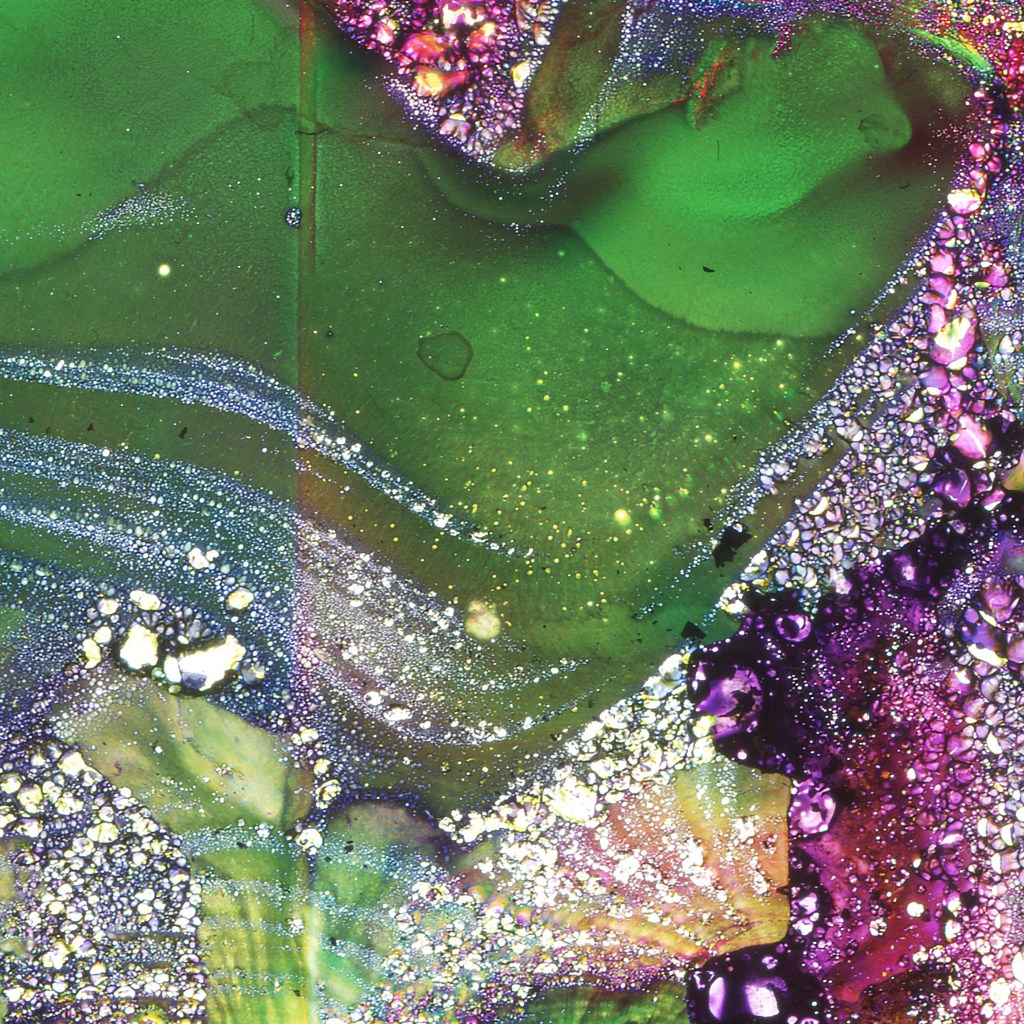
Cablcar is the latest full-length recording by Montréal-based artist and maker of concrète electronic tape music, Jeremy Young, released by Toronto’s Halocline Trance. The album is an experimental suite of electronic sketches for analog oscillators, each stemming from audio found on magnetic tape reels.
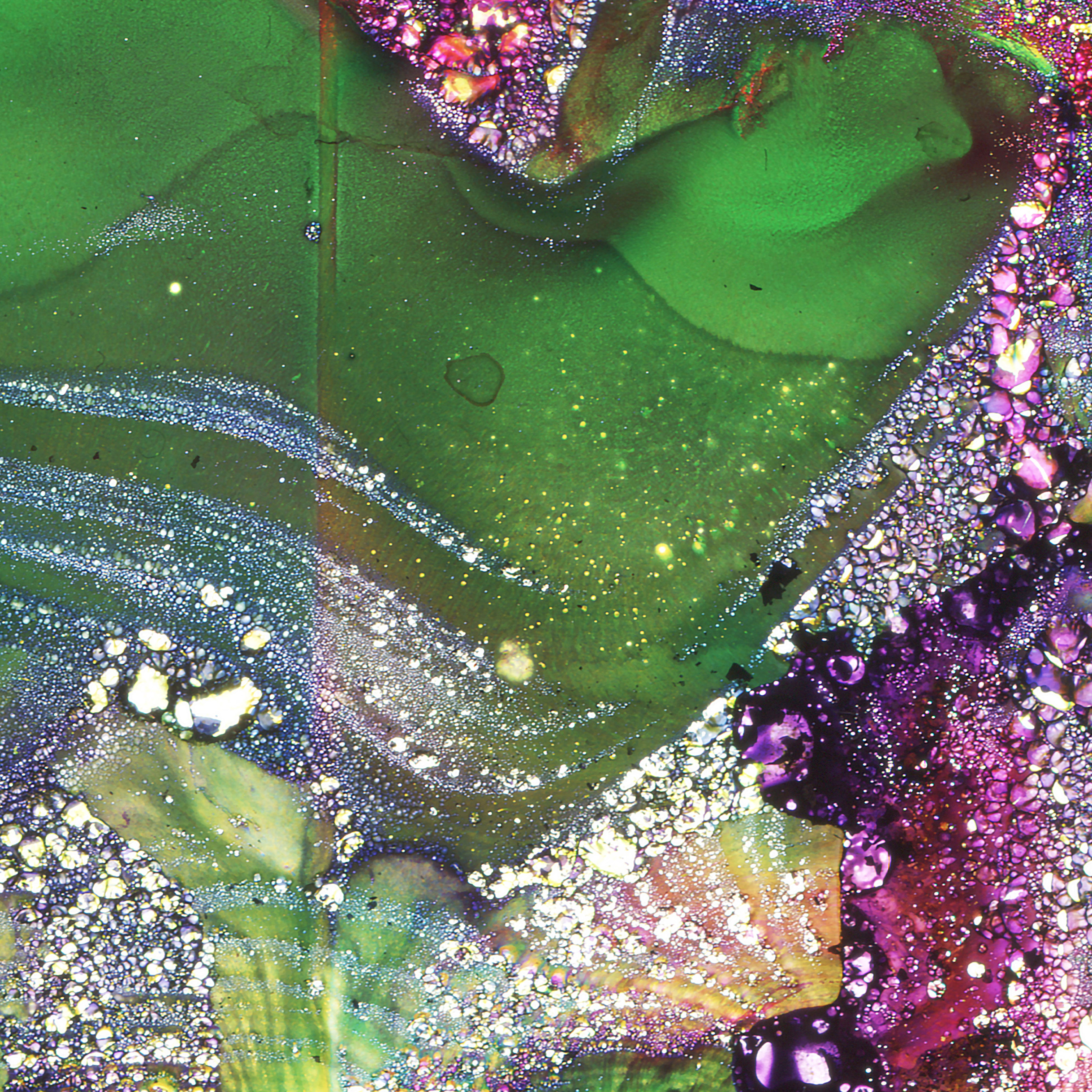
This post is not a “review” — it is a supplementary meditation on some elements of the creative process that went into making my recently released album, Cablcar.
To begin with, I initially set out to make the record I didn’t get a chance to make with Amaro, which is to say truer “solo” album. Because of all the duo collaborations on Amaro, I ended up feeling like that music wasn’t totally my own. (Don’t get me wrong, Amaro is great because of that.) But I still felt a longing to produce something closer to my live performance methodology; cyclic, emotive, and centered around the off-kilter musicality of the sine wave generators.
Secondly, I knew going in that I wanted to build motifs around parts of my process that I couldn’t control. That’s such a weird thing to say, and perhaps it’s oxymoronic, but chance is a powerful tool if one has a productive way of employing it. I wanted chance factors to lead me in directions I could not have plotted. It ended up being an essential vessel for forward momentum at various points throughout the making of this record.
Instead of lining tracks up in a tempo-mapped grid, I begin by setting several cycles of different lengths in place and listening to how they interact. Usually there’s a tape loop (often between 6-12 seconds) and two tonal collages in key set on loop stations. Between these three, hidden polyrhythmic patterns and stratified melodies emerge by chance. I sit in them, I listen, and I start to isolate the motifs that appear most interesting to my ears.
In some cases, I keep these cycles intact and let them flow together to make a brooding, oceanic current that’s hard to pin down, like on “Glass Kiss Fader” and “No Tangly Allegiances.” The result sounds like a drone, but inside of it, an internal battle for audition is happening between these hidden cycles.
In other cases like “Moray,” I will remove everything except an oddly hopping single-note ostinato, and begin to fill the spaces left behind in a more precise, stabbed method. Here I pre-tuned sets of oscillators to notes throughout a particular key and attenuated their attack-entry in real time, retuning up or down intervals on each oscillator in between punches-in.
“Moray” was the first track that I started for this project. It was really, in a simple way, a continuation of the vision for Amaro’s opener, “Trafic.” It’s almost a link reaching back to that record, and in some ways it’s the most straightforward track in this collection because of its clearly identifiable ABAa structure and its use of the found tape fragment placed like a hip-hop inspired vocal sample.
But the chance-determined process that led to the way the bass notes rotate and accent one another is what makes this piece so compelling to me. And the same process was used to create “Sing-a-dee,” which, in reference to the found tape sample therein, cycles around an ostinato in D minor.
Here, take a listen:
The metaphor of the “cable car” came into play once I had started working on the track of that name, which derived initially from an incredible found tape reel containing marketing audio (likely pulled from video tape) for an American travel agency advertising trips to the Swiss Alps. The tape featured a narrator describing trips they offered, popular destinations and the activities included—this particular samplette had incidental audio from Alpine trip participants laughing and playing on a mountain before and after riding the cable car to its summit.
I started working with the sample, reprinting and splicing it at my own comfortable tape speed to find aleatorically erratic cut points—a part of my process that engineers unpredictability into my thinking about usage, and a way to double layer the signal with tactile noise artefacts—and upon listening to the repetition of phrases around “cable car,” I realized there’s a resourceful symbol in here. Something about how this strange “retro-nostalgic” tourist transportation in wild natural places spoke to me.
Cable cars are a kind of bubble.
An isolated, protected means of maneuvering a landscape with limited interaction but accompanied by the spectre of grandiosity, the views it promises. It’s like, double isolation (double bubble), built for tourists that already exist in their bubble of suspended engagement with a place.
I was thinking, in the moment I was composing and recording this piece of work, about how isolated I personally felt from the world. I had just left the most meaningful job of my life, my grandmother Judy Young had just passed, I felt vulnerable and disassociated, I had no income beyond unemployment insurance, and not a ton of recent creative momentum to draw from either.
I felt like I was climbing a mountain but not necessarily connected to that mountain in any way. And I needed the vehicle to get me through it. The cable car was my tool of symbolism now, and I was going to own that sentiment of solitude to ride it to the top of whatever pinnacle of creativity it led me up.
I treated this metaphor like an invented narrative to help me, now self-identifying as a “character” inside this material as opposed to its author per se, navigate the passage of time almost like a tourist, guided but alone. Along for the ride, here for the view.
Another element that I think really informed the making of this record was my reluctance to pursue “clarity” in favor of blurriness and brokenness.
For example, Deanna Radford’s poem in “The Hydrometeor” (originally titled “Of a cloud”) was recorded directly to some seriously old, shitty tape. I opted not to record her recitation digitally first, and then dub to tape, because I wanted this auditory matter to sound like it belonged in the same ecosystem as the other “found,” archival tape samples used throughout.
In doing so, I innately made the decision to bury and blur the clarity of her reading in the track’s harmonic blanket by virtue of the recording’s limited frequency spectrum. I don’t normally associate music with colors, but in this piece I have always had this image of “The Hydrometeor” slowly changing from a dirty yellow, to a bright green, to a deep blue over its 7-minute runtime.
I’m not entirely sure where this reluctance towards clarity comes from, though.
I think it may have to do with the influence of Joseph Beuys’ work on my outlook. Beuys’ use of everyday objects and materials, elevated to assume the role of carrying a weight of cultural meaning and memory, and removed from their original contexts at times to suggest a departure from society’s hegemonic narratives, I think has imparted in me a sense that music and audio doesn’t really need to be constructed in a way that serves a “fantasy,” but can rather be a lens on recognizing and reconciling the fractures of our modern reality.
Our tools are extensions of our bodies, and both our tools and our bodies are constantly in states of decay and transformation, and simultaneously tethered to the decay of our world. I do believe art can be a respite from the pain of existence, and it can remind us that there is always beauty to be found in our shared home. But in a way, a music that is constructed with no rough edges is a statement in support of powers reinforcing the status quo.
Part of my commitment to using antiquated machines in my work is in subtle protest of society’s accumulating habits of extreme waste, the bullshit manifest destiny of forced technological obsolescence, and that our addiction to consumption leads only to toxic landfills and export to the third world. Reviving limited-capacity antiques in an era where “new” is cheap and “perfect” is ultimately disposable at least symbolically communicates that progress itself is a destructive and exploitative lie of capitalism.
Furthermore, attempting to create something beautiful with these machines is my way of asserting that in some way, they contain within them access points to a shared experience of humanity.
Analog machines are feeling machines. The computer is a thinking machine.
A tape machine is a listening apparatus, a radio is a speaking apparatus, a camera is a seeing apparatus; we have a natural connectivity to these pieces of technology because they operate like our own bodies and usually require tactile touch by our bodies to function. The pottery wheel allows us to shape a piece of clay out of nothing but the empty air space between one’s hands—and the result is a reflection of the intimacy of human-scale creativity, inclusive of the capacity for organic destruction, and without analytical intervention.
The false promise of digital limitlessness turns our focus away from the joy of experiencing limitation, which is really the one thing we share with every other person on this planet.
On a last note, without a doubt, one of the things that gives Cablcar its eery feel is the way that Rabih Beaini chose to tackle the mixing of this project.
From the get-go, it was clear to Rabih that “tape noise” wasn’t an adopted lo-fi sound design element, but a crucial compositional voice unto itself. And he chose to move signal linearly across his analog mixing board, adjusting the faders in real time, to respond to the flow of all sounds as they happened, almost improvising alongside the track in a very concrète approach.
You can hear this most clearly in “Sing-a-dee” and “Das Schweigen,” two tracks where sounds and tones come in and out like passing cars on a highway, each with their own velocities and masses. You can actually hear Rabih’s deft touch opening and shaping the sounds as the pieces progress.
In a similar way, my dear friend Guillermo Pizarro’s mastering literally embraces and enhances the spectrum of noise around tape hiss and the natural artefacts inherent to the media and machine itself. Not to the levels of Grouper—as mentioned by Pizarro in our email exchange—who uses enmeshment and immersion in tape noise as a fluid pool to wade through to find her sultry, soulful, minimal songwriting. Although we both adore the hissy poetry of Liz Harris’ sound, that was never the point.
But the opposite, removing those frequencies altogether, would’ve been a punishing crime to this work’s sonic truthfulness. In the end, Pizarro’s ear found that truth and built his masterful tableau around it warts and all.
After all, a “found tapes” album should kind of sound like the tapes themselves, no?
I want to thank everyone that had a hand in bringing this record to light, including: Deanna Radford, Catherine Debard, Rabih Beaini, Guillermo Pizarro, Charles-André Coderre, Audrey Legerot, Léon Lo, Anna Mayberry, Amy Gottung, and ecstatically, David Psutka. Thanks to Precision Record Pressing and SRD Distribution. And this is all dedicated to the life and times of Judy Young (1923-2023).
Please check out Cablcar via the eclectic, exciting, innovative record label Halocline Trance, via the link below.
Listen and purchase here, please.
 The Royal Editoryal